A NEW ERA IN DIABETIC SKINCARE
Prevent Diabetic Sores & Soothe Dry, Itchy, & Irritated Skin for Lasting Relief!
Published 4 February 2026

Diabetes-related skin issues, dry patches, foot odor, itchy skin, and neuropathy discomfort are common concerns for millions of Americans.
Unfortunately, skin-related issues are often neglected due to the loss of sensation that comes with diabetes, leading to increased discomfort, irritation, and worsening skin conditions.
If left untreated, they can escalate to diabetic sores, infections, and, in severe cases, even amputation. This can result in costly medical treatments and have a significant impact on daily life, mobility, and self-esteem.
For years, individuals have been left with ineffective treatments or harsh chemicals that don’t deliver lasting relief. Many have found that these products actually exacerbate the problem, leaving them frustrated and hopeless.
But does that mean those with diabetic skin issues have to accept the discomfort? Absolutely not.
Keep reading to discover how you can manage these skin concerns with a safe, all-natural solution—created by a podiatrist and made in the USA.
Plus, learn why people from all walks of life, including athletes and celebrities, are turning to this game-changing product for effective, long-lasting relief.
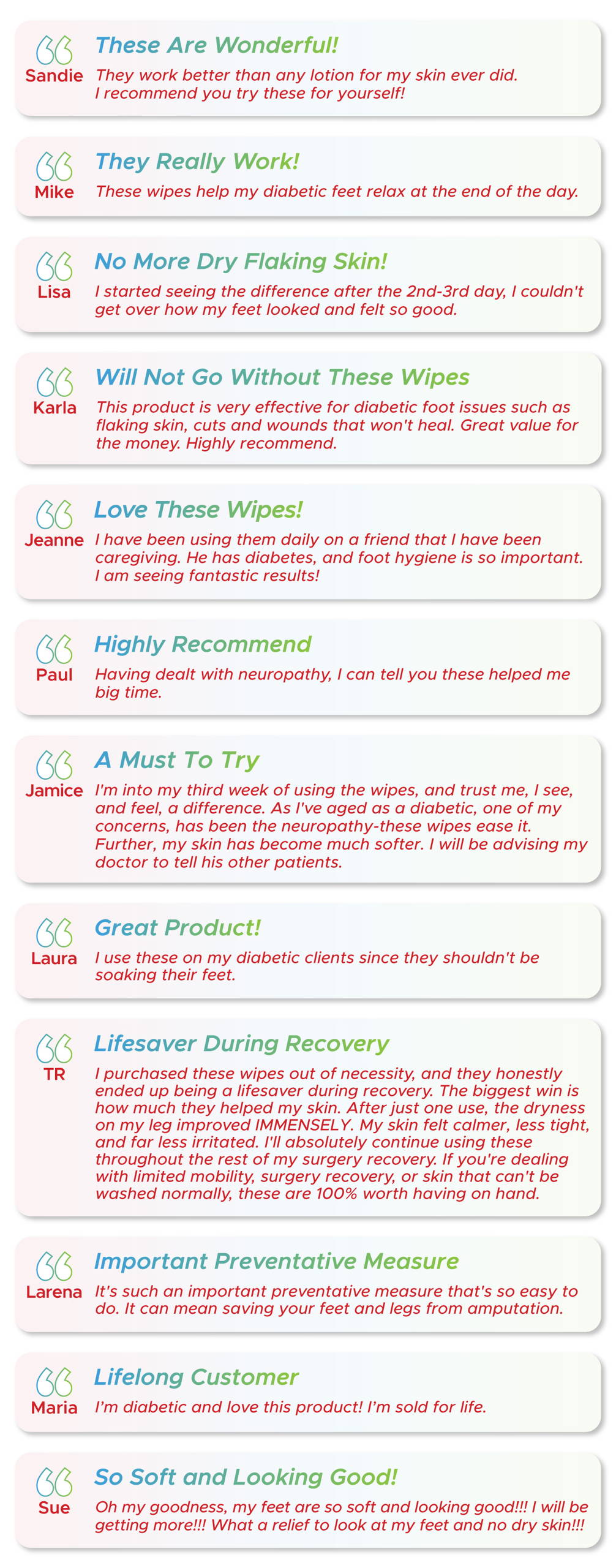
What people are saying:
Discover the All-Natural Solution for Lasting Comfort & Relief!
A scientific study by Dr. John Swierzewski, DPM, a lifelong eczema sufferer, found that a specific pH formulation is the key to restoring and naturally hydrating the skin.

Since then, Dr. John has focused on developing a solution that mirrors this pH level, helping individuals with diabetes manage skin issues like dry patches, foot odor, itchy skin, and neuropathy discomfort. As a podiatrist, he also discovered that this pH-balanced formula was effective in preventing diabetic sores and infections, offering lasting relief to his patients.
Say hello to Diabetes Support Wipes®, the all-natural, podiatrist-developed solution made in the USA that effectively addresses diabetes-related skin concerns. Using our wipes can provide you with a variety of benefits, such as:
- Preventing diabetic sores and infections
- Relieving neuropathy discomfort
- Reducing irritation and improving overall skin health
- Aiding in the healing of skin and sores
- Eliminating foot odor
- Soothing dry, cracked, and itchy skin
Disclaimer: This site is not a part of the Facebook website or Facebook Inc. Additionally, this site is NOT endorsed by Facebook in any way. FACEBOOK is a trademark of FACEBOOK, Inc.
Representations regarding the efficacy and safety of Diabetes Support Wipes® have not been evaluated by the Food and Drug Administration. The FDA only evaluates foods and drugs, not health care products like these. They are not intended to diagnose, prevent, treat, or cure any disease. This information does not constitute medical advice and it should not be relied upon as such. Consult with your doctor before modifying your regular medical regime. Results may vary.
Proudly made in the USA with globally sourced ingredients.
Scientific References: 1. Kenichiro Chikakane, MD, Hisashi Takahashi, MD, PhD — Measurement of skin pH and its significance in cutaneous diseases, Clinics in Dermatology, Vol. 13, Issue 4, July 1995. 2. Hans Christian Korting, MD, Otto Braun-Falco, MD — The effect of detergents on skin pH and its consequences, Vol. 14, Issue 1, January 1996. 3. F. Breidt Jr., J.S. Hayes, R.F. McFeeters — Independent Effects of Acetic Acid and pH on Survival of Escherichia coli, Journal of Food Protection, Vol. 67, No. 1, 2004. 4. Alakomi et al., 2000 — Lactic acid permeabilizes Gram negative bacteria by disrupting the outer membrane, Appl. Environ. Microbiol. 5. Breidt, Hayes, and Fleming, 2000 — Reduction of microflora of whole pickling cucumbers by blanching, J. Food Sci. 6. Brudzinski and Harrison, 1998 — Influence of incubation conditions on survival and acid tolerance response of E. coli, J. Food Prot. 7. Castanie-Cornet et al., 1999 — Control of acid resistance in Escherichia coli, J. Bacteriol. 8. Diez-Gonzalez and Russell, 1997 — The ability of E. coli O157:H7 to decrease its intracellular pH. 9. Mayerhauser, 2001 — Survival of enterohemorrhagic E. coli O157:H7 in retail mustard, J. Food Prot. 10. McKellar and Knight, 1999 — Growth and survival of various strains of enterohemorrhagic E. coli in hydrochloric and acetic acid, J. Food Prot.